



MC5R
The melanocortin-5 receptor (MC5R) is a G-protein-coupled receptor (GPCR) that mediates the effects of adrenocorticotropic hormone (ACTH) and melanocyte-stimulating hormones (MSH) on exocrine glands, regulating thermoregulation, immunomodulation, and sexual behavior[1]. MC5R is critically dependent on N-terminal serine-rich motifs for proper trafficking from the endoplasmic reticulum to the plasma membrane, ensuring functional cell surface expression[2]. Mechanistically, MC5R contributes to lipid metabolism in exocrine tissues, muscle, and adipose tissue, integrating hormonal signals into metabolic responses[2]. Compared with related melanocortin isoforms, MC5R forms functional heterodimers with MC1R, which modulate ligand-specific signaling and may inhibit cyclic AMP responses induced by α-MSH[3]. The human MC5R locus is localized to chromosome 18p11.2, providing a genomic reference for functional and mutational studies[4]. In experimental contexts, MC5R activation has been implicated in pigment dispersion in teleost models and may influence neuroendocrine and immune research applications[3]. Agonists of MC5R, including α-MSH derivatives, demonstrate potential for studying exocrine gland physiology, while the receptor’s trafficking motifs offer a target for designing inhibitors or modulators in vitro[2][3]. Collectively, these characteristics establish MC5R as a key mediator of exocrine and metabolic regulation, distinct from other melanocortin receptors, and provide mechanistic insight for translational research models.
References:
- [1]. Kim KS, et al. The porcine melanocortin-5 receptor (MC5R) gene: polymorphisms, linkage and physical mapping. Anim Genet. 2000;31(3):230-231. [Content Brief]
- [2]. Rodrigues AR, et al. Cell surface targeting of the Melanocortin 5 Receptor (MC5R) requires serine-rich terminal motifs. Biochim Biophys Acta Mol Cell Res. 2017 Jul;1864(7):1217-1226. [Content Brief]
- [3]. Kobayashi Y, et al. Dimerization of melanocortin receptor 1 (MC1R) and MC5R creates a ligand-dependent signal modulation: Potential participation in physiological color change in the flounder. Gen Comp Endocrinol. 2016 May 1;230-231:103-9. [Content Brief]
- [4]. Chowdhary BP, et al. Localization of the human melanocortin-5 receptor gene (MC5R) to chromosome band 18p11.2 by fluorescence in situ hybridization. Cytogenet Cell Genet. 1995;68(1-2):79-81. [Content Brief]
-
MC5R Related Products (11)
Related Products (11)

- 1
-
Setmelanotide
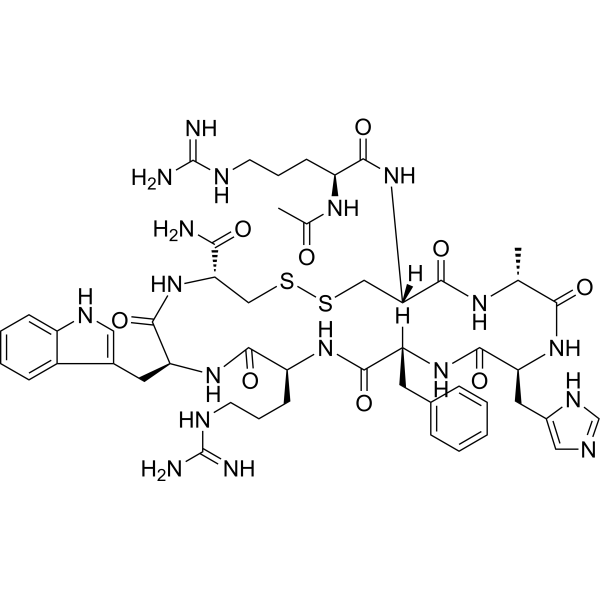 0 ImagesSynonyms: RM-493; BIM-22493; IRC-022493Setmelanotide (RM-493) is a blood-brain barrier-permeable, selective MC4R agonist with a Ki value of 2.1 nM for hMC4R. Setmelanotide activates the CaMKK2/AMPK signaling pathway. Setmelanotide mediates body weight homeostasis, feeding regulation and energy expenditure modulation; it reduces food intake, induces weight loss, decreases obesity severity, increases daytime activity and energy expenditure, lowers levels of leptin, triglycerides, fasting insulin and diastolic blood pressure, improves insulin sensitivity, glucose tolerance and fatty liver condition, and reverses respiratory depression. Setmelanotide is applicable to research related to obesity, hyperinsulinemia, fatty liver and respiratory depression.
-
JNJ-10229570
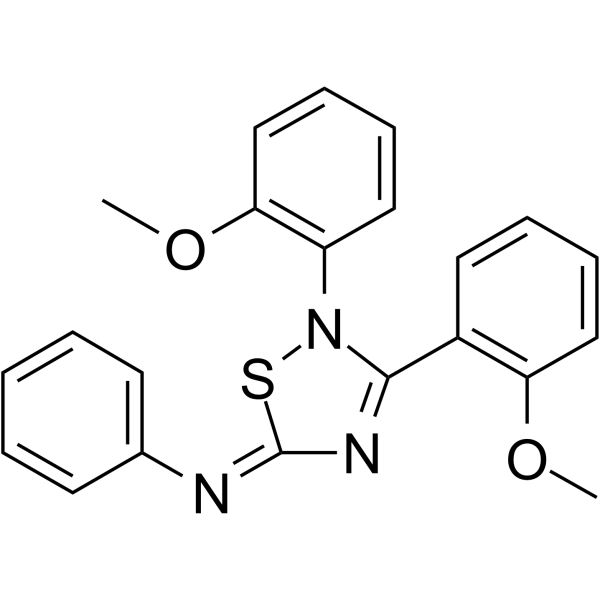 0 ImagesJNJ-10229570 is an antagonist of melanocortin receptor 1 (MC1R) and melanocortin receptor 5 (MC5R), which inhibits sebaceous gland differentiation and the production of sebum-specific lipids. JNJ-10229570 inhibits the binding of 125I-NDP-α-MSH to cells expressing human MC1R and MC5R, with IC50 values of 270 nM and 200 nM, respectively.
-
Nonapeptide-1 acetate salt
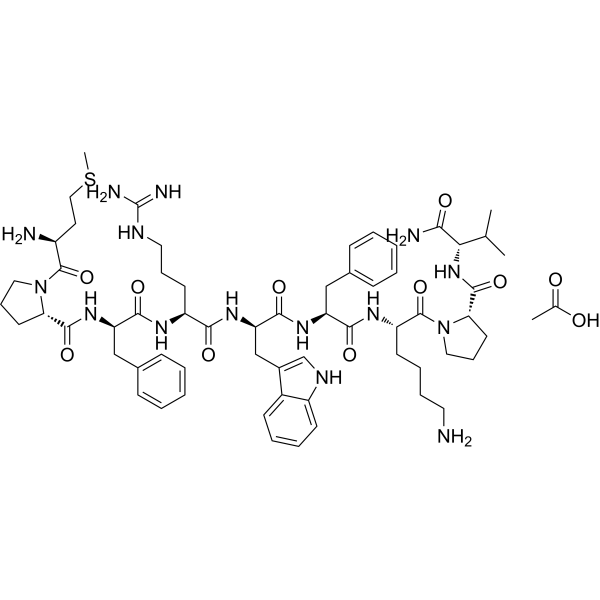 0 ImagesCat. No.: HY-P0097ASynonyms: Melanostatine-5 acetate saltNonapeptide-1 (Melanostatine-5) acetate salt, a peptide hormone, is a selective antagonist of MC1R (Ki: 40 nM). Nonapeptide-1 acetate salt is a competitive α-MSH antagonist that potently inhibits intracellular cAMP and melanosome dispersion induced by α-MSH in melanocytes (IC50: 2.5 nM and 11 nM, respectively). Nonapeptide-1 acetate salt inhibits melanin synthesis, and can be used in the research of skin pigmentation and regulation of steroid production in the adrenal gland, skin cancer.
-
Nonapeptide-1
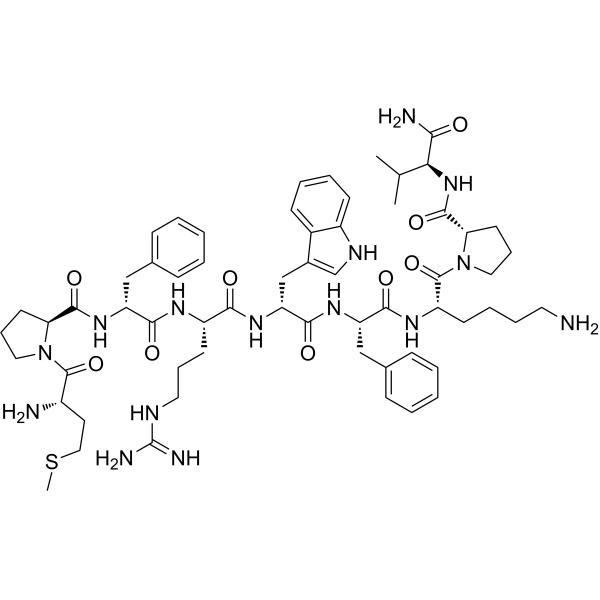 0 ImagesSynonyms: Melanostatine-5Nonapeptide-1 (Melanostatine-5), a peptide hormone, is a selective antagonist of MC1R (Ki: 40 nM). Nonapeptide-1 is a competitive α-MSH antagonist that potently inhibits intracellular cAMP and melanosome dispersion induced by α-MSH in melanocytes (IC50: 2.5 nM and 11 nM, respectively). Nonapeptide-1 inhibits melanin synthesis, and can be used in the research of skin pigmentation and regulation of steroid production in the adrenal gland, skin cancer.
-
LY2112688
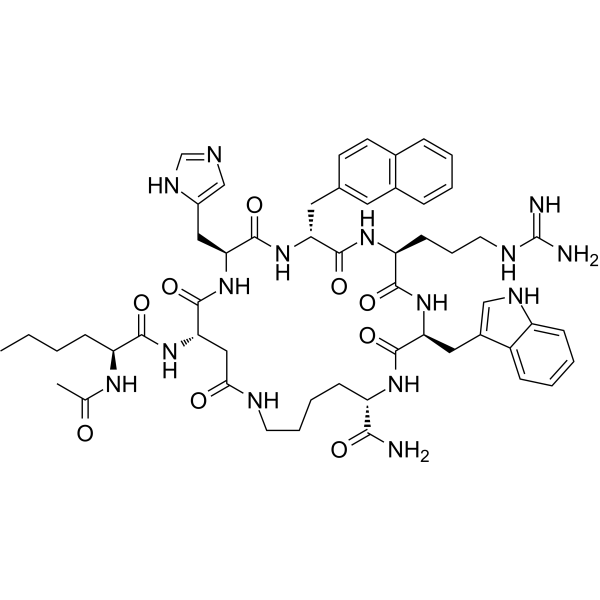
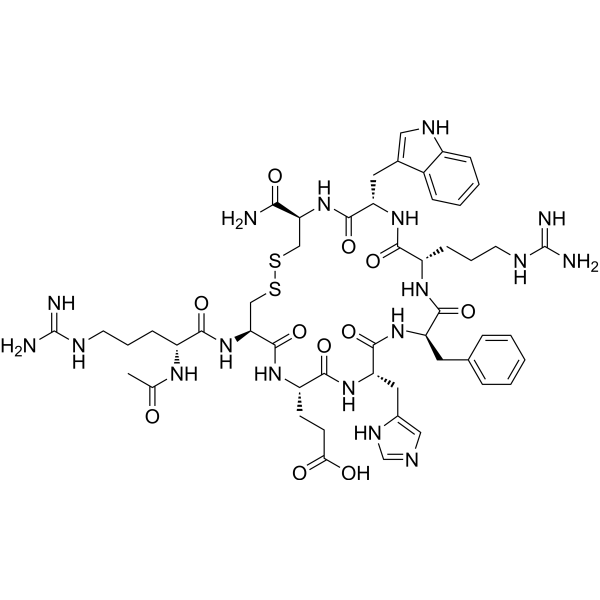 0 ImagesSynonyms: Ac-(d-Arg)-CEH-(d-Phe)-RWC-NH2LY2112688 (Ac-(d-Arg)-CEH-(d-Phe)-RWC-NH2) is a synthetic peptide selective melanocortin 4 receptor (MC4R) agonist with a Ki of 0.13 nM for human MC4R and Ki values of 165, 74, and 1713 nM for human MC1R, MC3R, and MC5R, respectively. LY2112688 activates MC4R-mediated cAMP signaling and promotes PYY and GLP-1 release by activating peripheral MC4R in enteroendocrine L cells; Kir7.1 signaling in MC4R neurons is involved in its sustained suppression of food intake. LY2112688 inhibits food intake in vivo and can elevate heart rate and blood pressure. LY2112688 is useful for research on obesity, energy homeostasis, and MC4R signaling.
-
Setmelanotide TFA
 0 ImagesCat. No.: HY-19870ASynonyms: RM-493 TFA; BIM-22493 TFA; IRC-022493 TFASetmelanotide TFA (RM-493 TFA) is a blood-brain barrier-permeable, selective MC4R agonist with a Ki value of 2.1 nM for hMC4R. Setmelanotide TFA activates the CaMKK2/AMPK signaling pathway. Setmelanotide TFA mediates body weight homeostasis, feeding regulation and energy expenditure modulation; it reduces food intake, induces weight loss, decreases obesity severity, increases daytime activity and energy expenditure, lowers levels of leptin, triglycerides, fasting insulin and diastolic blood pressure, improves insulin sensitivity, glucose tolerance and fatty liver condition, and reverses respiratory depression. Setmelanotide TFA is applicable to research related to obesity, hyperinsulinemia, fatty liver and respiratory depression.
-
Setmelanotide monoacetate
 0 ImagesSynonyms: RM-493 monoacetate; BIM-22493 monoacetate; IRC-022493 monoacetateSetmelanotide monoacetate (RM-493 monoacetate) is a blood-brain barrier-permeable, selective MC4R agonist with a Ki value of 2.1 nM for hMC4R. Setmelanotide monoacetate activates the CaMKK2/AMPK signaling pathway. Setmelanotide monoacetate mediates body weight homeostasis, feeding regulation and energy expenditure modulation; it reduces food intake, induces weight loss, decreases obesity severity, increases daytime activity and energy expenditure, lowers levels of leptin, triglycerides, fasting insulin and diastolic blood pressure, improves insulin sensitivity, glucose tolerance and fatty liver condition, and reverses respiratory depression. Setmelanotide monoacetate is applicable to research related to obesity, hyperinsulinemia, fatty liver and respiratory depression.
-
PG-901
 0 ImagesPG-901 is a full, selective MC5R agonist (EC50 = 0.072 nM for hMC5R). PG-901 is also a full antagonist at the hMC3R and the hMC4R (Kb: 1.0 nM and 0.53 nM, respectively). PG-901 significantly diminishes Cytokines (IL-1α, IL-1β, IL-6). PG-901 increases glucose tolerance, reduces blood glucose, decreases retinal damage.
-
Ac-c[Cys-Glu-His-d-Phe-Arg-Trp-d-Cys]-Pro-Pro-Lys-Asp-NH2
![Ac-c[Cys-Glu-His-d-Phe-Arg-Trp-d-Cys]-Pro-Pro-Lys-Asp-NH2](https://file.medchemexpress.com/product_pic/hy-p4665.gif "Click to View Ac-c[Cys-Glu-His-d-Phe-Arg-Trp-d-Cys]-Pro-Pro-Lys-Asp-NH2 Product Detail") 0 ImagesAc-c-Pro-Pro-Lys-Asp-NH2 is a selective human melanocortin 5 receptor (hMC5R) antagonist with an IC50 of 10 nM.
0 ImagesAc-c-Pro-Pro-Lys-Asp-NH2 is a selective human melanocortin 5 receptor (hMC5R) antagonist with an IC50 of 10 nM.
-
Cyclic MC4R peptide agonist-1
 0 ImagesCat. No.: HY-P12217Cyclic MC4R peptide agonist-1 is a cyclic peptide agonist of the melanocortin-4 receptor (melanocortin-4 receptor). Cyclic MC4R peptide agonist-1 activates the human melanocortin-4 receptor via an alternative activation motif centered on APWR, and this activation process is independent of the classical HFRW pharmacophore. Cyclic MC4R peptide agonist-1 inhibits signal transduction of the human melanocortin-3 receptor and melanocortin-5 receptor. Cyclic MC4R peptide agonist-1 is used in research related to obesity.
- 1



